
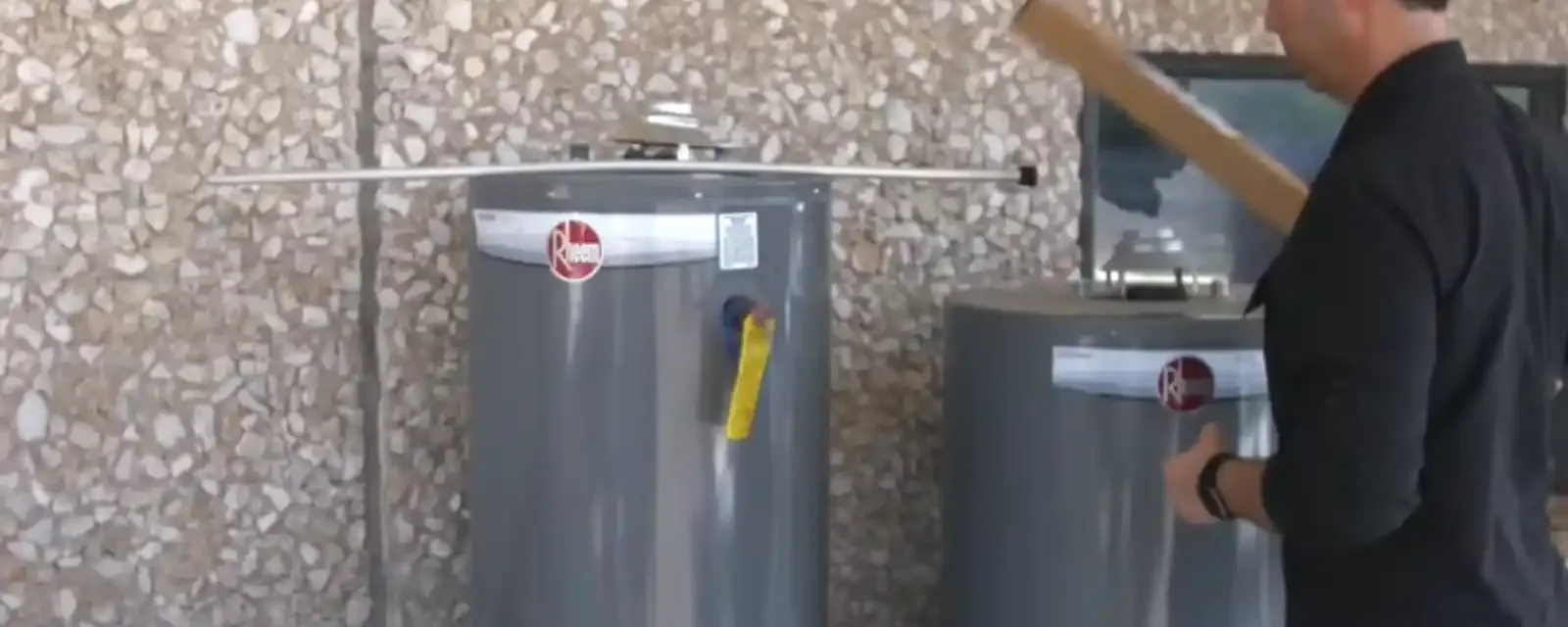
Replacing a tank water heater with a tankless unit in Georgetown, KY is not a like-for-like swap. A tankless heater makes hot water only while a tap is open, so it brings new demands on the gas line, the vent and the water itself. The tank usually comes out in an hour of work, but the planning around it takes longer.
Four things decide whether the switch goes smoothly: gas line capacity, venting, condensate drainage and scale control. This guide walks through each, compares the two types side by side and ends with a list of questions worth asking any installer. If you are already sure and want to talk specifics, our tankless water heater page describes the service.
Tank or tankless: the decision table
Neither type wins everywhere. This table lines up the differences that matter most in a retrofit.
| Question | Tank | Tankless |
|---|---|---|
| How does it make hot water? | Heats and stores a full tank, then reheats as you use it | Heats on demand as water flows through. |
| Space needed | A floor footprint and clearance around the tank | Wall space, with room for the vent and service access. |
| Gas line demand | Moderate | Often higher, so the line size must be checked. |
| Venting | Usually reuses the existing vent | Often needs a new vent run and different pipe. |
| Hard water impact | Sediment settles in the tank | Scale forms inside the heat exchanger. |
| Hot water at several taps at once | Limited by the stored volume | Limited by the unit's flow rating. |
The right pick depends on how many people use hot water at the same time and what your home already has in place.
Why does my hot water run out, and is tankless the answer?
Running out of hot water mid-shower usually means the tank is too small for the household, the heating element or burner is failing, or sediment has built up at the bottom. Tankless units remove the storage limit, so they will not run out the way a tank does. They do have a flow limit, though, so two showers and a dishwasher running at once can outpace a unit that is too small.
If the existing tank is simply aging and leaking, replacement is the real conversation. If it works but the supply feels short, a technician can check whether a repair or a larger tank would solve it more simply, and the water heater repair page describes that path.
Rather have a licensed plumber look at it?
Call the 24/7 line. You get a clear price before work starts.
Gas line size and venting come first
Every gas tankless heater has an input rating printed on its label. The installer compares that rating with the length and diameter of the gas line that feeds it, because a line that was fine for a tank may starve a tankless unit. If it is too small, a larger line is run to the heater, and that cost belongs in the quote.
Venting is the second constraint. The manufacturer's instructions set the vent material, the maximum run and the clearances, and the state water heater packet adds its own rules, including an upward slope in the gas vent and set distances from doors and windows. Condensing models make acidic condensate that needs a drain, and some manufacturers call for a neutralizer before it goes down the pipe.
Gas work is a licensed-professional job. If you ever smell gas, leave the building first and call Columbia Gas of Kentucky's emergency line or 911 from outside, before you call a plumber.
How the replacement usually unfolds
The order below is typical, though a site visit can change it.
Site survey
The plumber checks the gas line, the vent path, the drain location and where the unit can mount.
Permit
A licensed master plumber obtains the state permit before the old heater is touched.
Removal
The tank is shut off, drained and carried out, and the old vent is evaluated for reuse.
Installation
The new unit is mounted, then gas, water, vent, condensate and isolation valves are connected.
Inspection and startup
State inspections are scheduled, and the unit is fired up and checked against the manufacturer's startup list.
Questions to ask any installer before you agree
A confident installer will answer these without hesitation. Vague answers are a signal to keep looking.
- Will my existing gas line support this model, and what does any upgrade cost?
- Is the current vent reusable, or does this unit need a new run?
- Where will the condensate go, and is a neutralizer included?
- Who pulls the permit, and are the inspections part of the price?
- What scale prevention does this unit need in my water?
- Does the quote include isolation valves for flushing?
- What does the manufacturer's warranty require for maintenance?
Hot water that goes lukewarm after a few weeks
A tankless unit that starts delivering lukewarm water or throws error codes can be fighting scale or a restricted flow. A plumber can flush the heat exchanger and check the inlet filter. Do not ignore it, because scale is much easier to remove early than late.
When to call a licensed plumber for a tankless swap
Call before the tank fails if it is old, leaking at the base or no longer keeping up. A planned replacement gives you time to size the gas line and vent properly. If you are weighing options, the water heater installation service covers tank and tankless work together.
We cover Georgetown and nearby areas such as Midway in Woodford County, and the service area page lists the rest. Homeowners in the Falls Creek area and the older neighborhoods near downtown can have very different gas and vent setups, so a site visit matters.
Georgetown, KY local note: hard water and your tankless heater
The city utility, Georgetown Municipal Water & Sewer Service, calls its supply extremely hard. Calcium and magnesium dissolve into the groundwater as it travels through limestone, and the utility says it does not soften at the plant. No hardness number appears on the pages we found, so test your tap or ask the utility before assuming anything.
The main source is Royal Spring, and the utility supplements it with treated water bought from the Frankfort Plant Board and, as needed, from Kentucky American Water. The practical consequence is that hardness stays part of life here, and a tankless heater's narrow internal passages are where scale collects. Ask for isolation valves at installation, and flush the unit on the manufacturer's schedule.
Questions readers ask
Often it can mount on a nearby wall, but the old footprint does not tell you everything. The gas line, vent path and drain location decide where it can go. A site survey answers this.
Possibly. The unit's input rating is compared with the line's size and length. A line that served a tank may be too small, so ask for the check in writing.
Mineral scale builds on the heat exchanger and restricts flow. Over time that can reduce hot water output and shorten the unit's life. Follow the manufacturer's flushing schedule.
An owner-occupant can legally pull the permit for their own home, but this job involves gas piping and venting, and mistakes in either are a safety risk. A licensed master plumber is the safer path.
Insurers generally pay for sudden, accidental loss, not for equipment that wore out. A heater that aged out is usually your cost. Ask your insurer how your policy reads.
No, but it is a reason to plan for maintenance. Georgetown's utility calls its water extremely hard, so scale prevention and regular flushing matter more here. Some homeowners also add a water treatment system, and your installer can explain the options.
Where the local facts come from
According to these primary sources, which this page relies on for local facts, permit rules and published guidelines: