
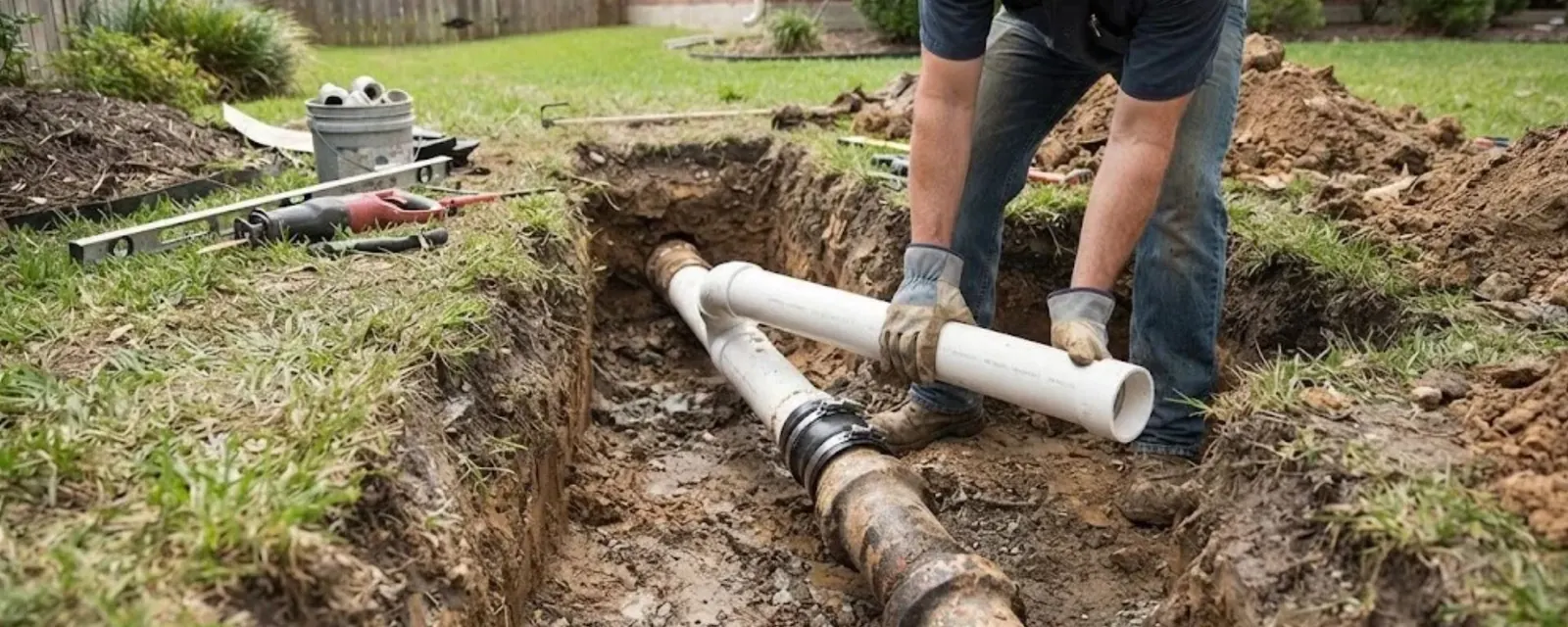
Sewer line repair in Georgetown, KY means fixing the pipe that carries wastewater from your house out to the public main, whether that is one cracked section, a root-damaged joint or the whole run. The urgent version is sewage backing into a tub, shower or basement drain. Round-the-clock 24/7 dispatch can get a licensed plumber moving. Until then, stop running water and keep people out of any room with sewage on the floor.
Repair is different from cleaning. If a pipe is blocked but sound, it needs cleaning. If it is cracked, offset, collapsed or full of roots that keep returning, the pipe itself has to be fixed, and that may be done without digging up the whole yard.
Signs the pipe is damaged, not only blocked
A clog clears and stays clear. A damaged pipe keeps giving the same warning in different ways.
Backups after cleaning
The line works for a few weeks, then stops again, often at the same point.
Gurgling fixtures
Toilets or tubs gurgle when another fixture drains, pointing to restricted flow.
Wet or sunken yard spot
A soft patch or dip along the sewer path can mean a leak or settled pipe.
Sewer odor outside
A smell near a cleanout or in the yard suggests wastewater is escaping.
Roots found in the cable
Fine roots on a cable head mean the pipe has an opening somewhere.
Foundation cracks or damp slab
Moisture near a slab can come from a leaking drain below it.
Sewer backup: what to do first and what it tells us
When sewage comes up in a tub, shower or floor drain, the lowest opening in the house usually shows it first. Stop using every sink, toilet and appliance, because each flush or load of laundry adds to the problem. Keep children, pets and bare feet away, and avoid touching electrical items that sit in wet areas.
A backup does not automatically mean a broken pipe. Grease or paper may have stopped the line, and the plumber can sometimes clear it the same day. If a camera then shows a break, a belly or a root-filled joint, repair becomes the second step. We answer backup calls overnight and on weekends, and the price is stated before work starts.
Tell dispatch which fixtures are affected and whether the problem started suddenly or built up over days. That helps the technician bring the right equipment.
Sewer Line Repair: talk to a person now
Describe the problem and get a clear price before work starts.
Trenchless repair or open trench
Most failed sewer pipes can be fixed in one of two ways. The right one depends on what the camera shows.
Trenchless (lining or pipe bursting)
- Fewer holes in lawn, drive or landscaping.
- Works through existing cleanouts or short access pits.
- Needs a pipe that can be cleaned and kept open.
- Not suited to a fully collapsed or badly offset run.
- Pipe diameter may shrink a little with a liner.
Open trench replacement
- Replaces the pipe with new, continuous material.
- Can correct a belly or a wrong slope.
- Requires digging, shoring and restoration.
- Is the usual answer for a collapsed line.
- Needs a plumbing permit in Kentucky.
Pipe lining and spot repair for a cracked section with roots
A short crack or joint gap with root intrusion is the textbook case for a localized repair. The roots enter where water leaks out, then grow into a mass that catches paper and grease. Cutting the roots gives temporary relief, but the opening stays unless the pipe is sealed.
In a lining repair, the plumber cleans the pipe, often with a root cutter or a jetter, and inspects it by camera. A resin-soaked liner is then placed across the damaged area and cured to form a new inner wall. A spot repair covers only the bad section, while a full liner covers a longer run.
Lining is not a cure for every pipe. It needs a clear path, a pipe that has not collapsed, and sound ends on both sides of the damage. If the camera shows a heavy belly or a break that has shifted, digging is the better call.
Sewer lateral replacement when the pipe has run its course
The lateral is the pipe that runs from the house to the public main. When it has multiple cracks, a bad slope or a collapse, replacing the whole run is often more sensible than repairing it piece by piece. New material gives a smooth interior and a consistent grade for years of service.
Replacement means finding the line, calling Kentucky 811 before anyone digs, planning the trench, and restoring the surface afterward. Because the work crosses private land and ends at a public connection, ask GMWSS where the public main ends and the private line begins if you are unsure.
Georgetown, KY local note: a new house sewer needs a permit
Kentucky's plumbing regulation requires a plumbing installation permit for a new or replacement house sewer, while cleaning out waste or sewer pipes does not need one. Only two kinds of applicant can pull it: a licensed master plumber, or an owner doing the work on their own residence.
That affects how you hire. Before anyone digs, request the Kentucky licence behind the permit and confirm it with the state Division of Plumbing at dhbc.ky.gov. The Scott County inspector holds office hours at the Scott County Health Department, so inspection of covered work is a state process and not a city one.
Why a leaking sewer line is not harmless in Georgetown
Georgetown sits on Bluegrass limestone, where the Kentucky Geological Survey explains that groundwater dissolves rock and creates karst. In karst terrain, sewage, oil and other pollutants that enter the ground are not filtered the way they would be in a thicker soil.
So a sewer line that leaks under a yard is more than a nuisance. It can send wastewater to the same groundwater that feeds springs. That is a practical reason to repair a known leak rather than keep cleaning around it.
City sewer or septic: how to tell which you have
GMWSS provides sewer service in Georgetown, but not every property in Scott County is on it. If you pay a sewer charge on your water or utility bill, you are probably connected to a public main. A septic tank usually has a buried tank and a drain field, and a pump-out record instead of a sewer bill.
If you are unsure, ask GMWSS whether your address has a sewer connection. This page covers the pipe from house to public main. It does not cover septic pumping or tank service, and we will tell you if your property turns out to be on septic.
Cast iron sewer pipe repair
Older homes may have cast iron drain and sewer pipe, especially inside the foundation and under the slab. Cast iron rusts from the inside, and the rough, scaled interior catches grease and paper. In time the wall can crack, split at a joint or leak at a hub.
A camera shows whether the pipe can be cleaned and relined, patched at a joint, or cut out and replaced with modern pipe. Work inside the house often involves cutting a floor or wall, so we explain the access plan before starting. A section that crosses under the slab may need a tunneling or relining approach.
If the line only needs cleaning
Not every slow main is a repair. Roots, grease or paper that clog a sound pipe can be removed by cabling or jetting, which is what main sewer cleaning covers. A camera visit can confirm which case you have.
Sewer repairs are scheduled for Georgetown homes and for Midway, and the service area page explains which utility serves which address.
What affects the cost of sewer line repair
A clear price comes before work starts. These factors drive the number.
Insurers tend to pay for sudden accidents and not for age or upkeep, so a pipe that wore out is usually not covered. Some policies add sewer backup coverage, so ask your insurer.
Camera findings sometimes change the plan, and we explain why. Want your real number? Call (855) 575-2890.
Sewer Line Repair questions answered
Yes. Dispatch runs 24/7, and sewage backing into the house is taken as an urgent call at night, on weekends and on holidays. The first visit often stabilizes the line, then a camera shows whether a repair is needed. Stop using water until the plumber arrives.
A clog clears and stays clear, while a broken pipe keeps backing up, often at the same spot. Roots on the cable, a wet patch in the yard or a gurgle that returns after cleaning all point to damage. A camera through sewer inspection settles it.
Yes. Kentucky requires a plumbing installation permit for a new or replacement house sewer. Master plumbers can pull it, and so can an owner-occupant on a personal residence. A rental property does not qualify for the owner route.
Sometimes. A cracked section with root intrusion can often be lined from an existing cleanout. A collapsed or badly offset pipe usually needs a trench. The camera result decides which method fits.
Because wastewater can leak into the soil. Georgetown is on limestone karst, where sewage is not filtered before reaching groundwater, so a slow leak is worth fixing. Leaks can also undermine soil around the pipe.
If a sewer charge shows up on your GMWSS bill, you are likely connected to the public main. A buried tank and drain field mean septic. Septic pumping is outside what this page covers, so ask GMWSS to confirm your address.
Water supply problems such as low pressure or a wet spot near the meter belong to a different pipe. See water service line repair for that work.
Where the local facts come from
According to these primary sources, which this page relies on for local facts, permit rules and published guidelines: