
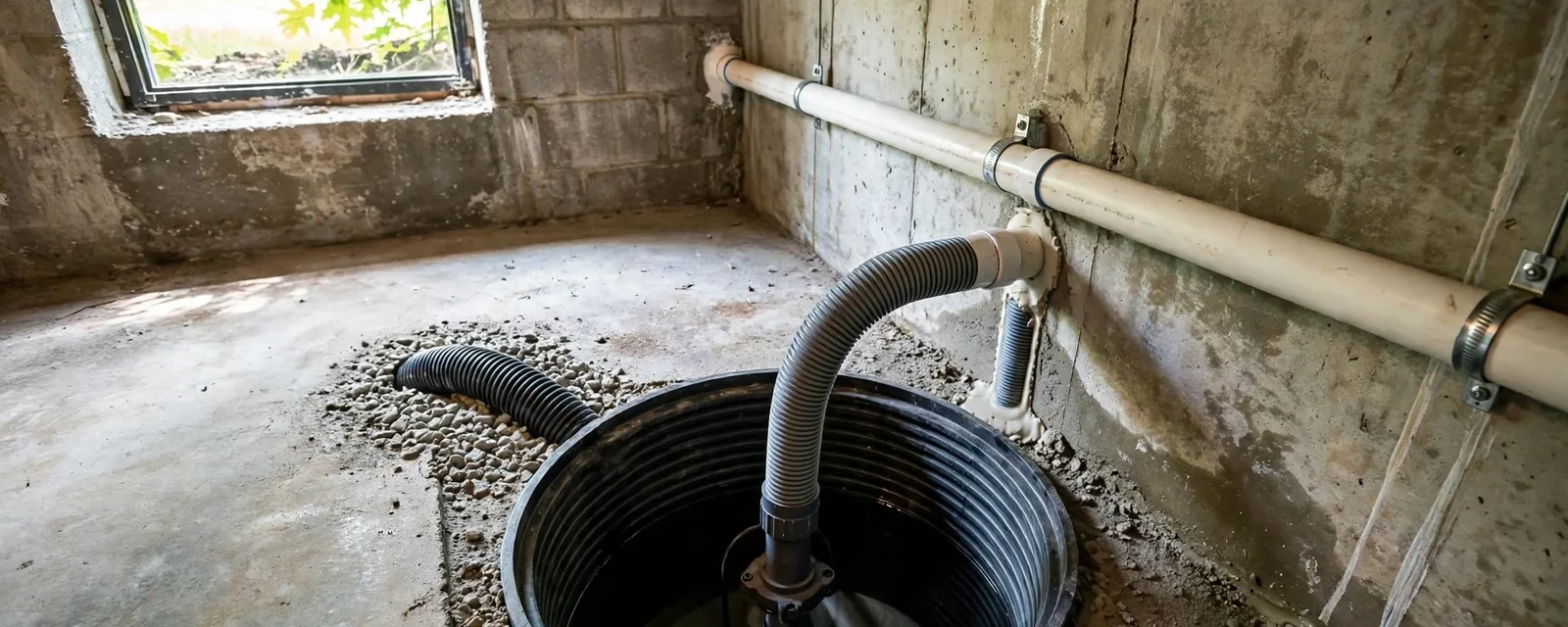
Water standing in a crawlspace after a heavy rain, or a pump that has gone silent while the pit fills, is an emergency that grows by the hour. Georgetown 24/7 Plumbing offers Sump Pump Installation and Repair in Georgetown, KY, with 24/7 emergency response. Until a crew gets there, stay out of standing water near outlets, move belongings up, and shut off power to the area if you can reach the panel dry.
A sump pump sits in a pit at the lowest point of a basement or crawlspace, senses rising water with a float, and pushes it out through a discharge line. Many homes in this part of Kentucky have one, and ours repair the pump, switch, check valve and discharge. For damp walls that no pump can fix, see basement waterproofing.
Water in the crawlspace after rain, or a pump that never stops
The most common calls are the same few stories. The pit fills and the pump never starts. The pump runs for hours after the rain has stopped. The basement smells damp even when nothing is visibly wet, or water creeps along the wall where the floor meets the foundation. Each points to a different part of the system, and the technical name for the repair is a sump pump replacement, float switch repair or discharge line fix.
When the pump does not start, the usual causes are a stuck float, a tripped breaker or a dead motor. When it runs constantly, a float is jammed against the side of the pit, the check valve is stuck open and water drains back down the pipe, or groundwater is rising faster than the pump can move it. We test each before replacing anything.
What the pump is doing and what it usually means
A pit with a pump in it can fail in a few ways. This is how we narrow it down.
| What you see | Likely cause | Typical remedy |
|---|---|---|
| Pit full, pump silent | Dead motor or tripped power | Check outlet and breaker, replace pump. |
| Pump runs and does not stop | Stuck float or check valve | Free or replace the float or valve. |
| Pump hums, moves no water | Clogged intake or failed impeller | Clean the intake or replace the pump. |
| Loud, rattling pump | Debris or worn bearing | Clean the pit, replace worn pump. |
| Water backs down the pipe | Failed check valve | Install a new check valve. |
Most pumps wear out gradually. If yours is old and has run through many wet seasons, replacing it before it fails is cheaper than a flooded floor.
Sump Pump Installation and Repair: talk to a person now
Describe the problem and get a clear price before work starts.
Limestone, karst and why Georgetown basements get wet
The Kentucky Geological Survey describes karst as limestone dissolved by groundwater into fractures. Georgetown lies in that Bluegrass country, and the fractures carry surface water underground. Royal Spring, the source of the city's water since 1775, is itself a karst spring. Water can move through those fractures quickly, so a crawlspace may stay dry for weeks and then show seepage after a storm.
At the Lexington station, roughly twelve days each year bring an inch or more of rain, and a sump pump exists for those days. Test the pump before the wet season by pouring a bucket of water into the pit. Because karst does not filter pollutants, avoid sending pump water toward a neighbor's yard or a well.
Flooding right now: what to do before we arrive
If water is rising, these actions come first. Dispatch is open at night and on weekends.
Stay out of the water
Standing water near outlets or an energized pump can carry current. Turn off the breaker only from dry ground.
Lift what you can
Move boxes, electronics and papers up off the floor, and unplug anything low.
Check the discharge outside
Make sure the end of the pipe is not frozen, buried, clogged with leaves or draining back toward the house.
Call early
Same-day appointments are offered when the schedule allows, and overnight dispatch is available when it cannot wait.
What to check before you call about a wet crawlspace
A quick look helps us bring the right pump or parts.
- Confirm the pump is plugged in and the breaker has not tripped.
- Lift the float gently to see whether the pump starts.
- Look for a clog or leaves at the discharge pipe outside.
- Note whether water appears during rain or days after.
- Photograph the pit, the pump label and any wet walls.
- Know whether the pump has a battery backup.
Sump pump installation: pit, pump, check valve and discharge
A new installation starts with where the water collects. We set a basin at the low point, sized so the pump does not cycle every few minutes, then add the pump, a float switch, a check valve and a discharge line that carries water outside. Submersible pumps sit in the pit and are quieter, while pedestal pumps sit above it and are easier to service.
A battery backup pump and a high-water alarm are worth pricing, since storms that fill pits also knock out power.
The discharge matters as much as the pump. It should end well away from the foundation, on ground that slopes away from the house. Before digging a trench for the line, call Kentucky 811, since buried utilities are common. Ask GMWSS before connecting pump discharge to a sewer line, because many utilities prohibit it.
Sewage ejector pumps for basement bathrooms
An ejector pump looks like a sump pump but does a different job. It lifts waste from a basement toilet, sink or shower up to the main drain, and it sits in a sealed, vented basin. A sump pump should never be connected to it. Failed ejectors cause sewage smells and backups, and they are a repair for a plumber, not a weekend project.
Adding a new ejector for a basement bathroom is plumbing installation and may need a permit. Ask the state plumbing inspector, and see plumbing installation for how we handle new fixtures.
What a pump cannot do
A pump moves water. It does not seal a foundation, stop damp walls, or keep humidity out of the air. A pit that fills often is a sign the ground around the house is saturated, and a larger pump will not change that. Mold, mineral crust on block walls and efflorescence need other fixes.
If the water arrives through the wall, cracks or the floor-wall joint rather than the pit, read about waterproofing methods that stop seepage at the wall. In April 2025, Elkhorn Creek reached major flood stage at the Franklin County gauge, a reminder of how wet this region can get. We cover the pump, and structural repair is for a different specialist.
Sump pump work covers Georgetown and Midway, and the service area page shows the other towns where we dispatch.
What sets the price of sump pump work
We state the price before starting. These are the main drivers.
Homeowners insurance typically covers sudden and accidental damage, but many policies exclude groundwater seepage or need an endorsement for sump overflow. Ask your insurer before the wet season.
Pits, soils and discharge routes vary too much for a quote by description. Want your real number? Call (855) 575-2890.
Sump Pump Installation and Repair questions answered
Yes. Dispatch is 24/7, which matters because pumps tend to fail during storms. Stay out of the water, shut off power from a dry spot and call us.
Rain soaks the ground and groundwater finds the lowest spot. In limestone country like Georgetown, water can move through fractures in the rock and show up after heavy storms. A pump handles the water, and drain cleaning helps if gutters or downspout lines are clogged.
Not always. A stuck float, a leaking check valve or a high water table can keep it running. If it runs when it has not rained, call so we can check the float and the valve.
Check that it is plugged in and the breaker has not tripped, then lift the float to see whether it starts. If water is in the pit and the pump still does not start, it needs service.
Ask GMWSS first, because many sewer systems do not allow it. Storm water in a sanitary sewer can overload it, and we will not install a connection the utility does not permit.
Where the local facts come from
According to these primary sources, which this page relies on for local facts, permit rules and published guidelines: