
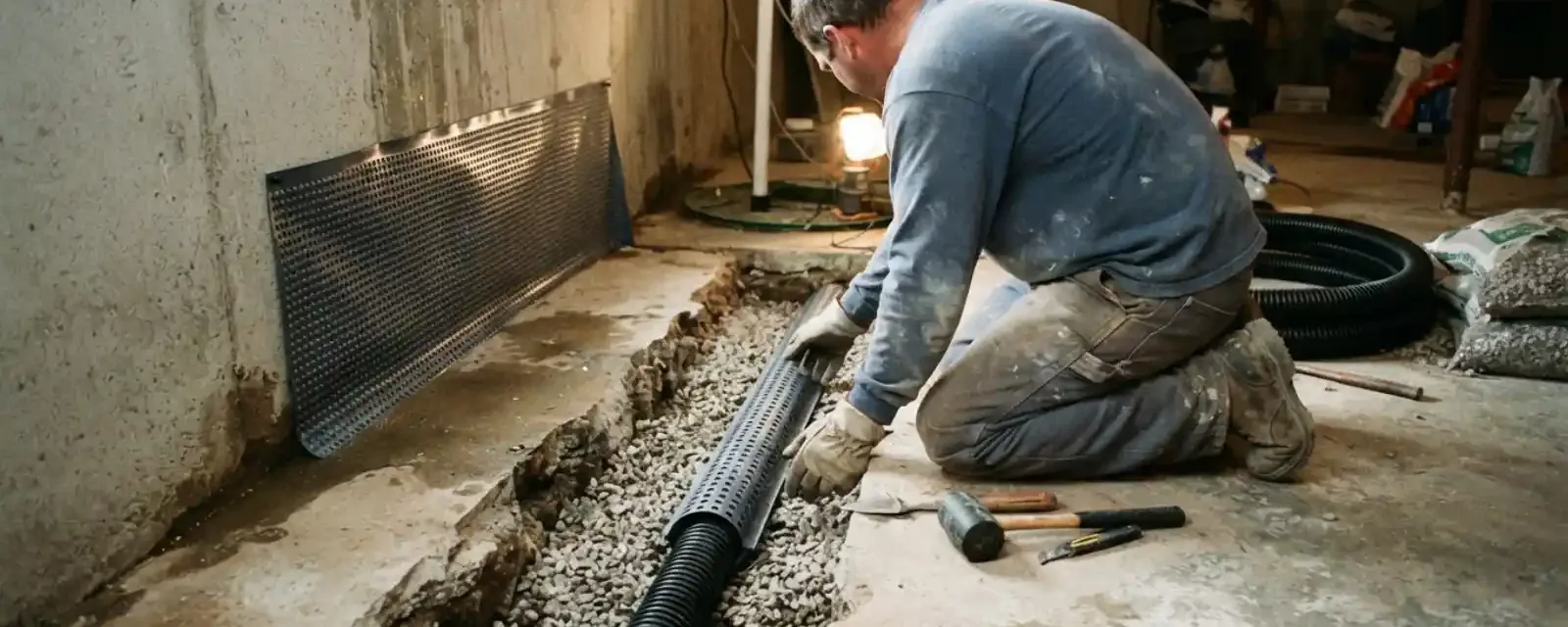
A basement that smells damp, shows white crust on the walls or collects water along the floor can be dealt with, but only once you know where the water comes from. Georgetown 24/7 Plumbing offers Basement Waterproofing advice and plumbing-side work in Georgetown, KY. The goal is to move groundwater out of the structure and give it somewhere to go, not to paint over a symptom.
Basement waterproofing is a set of methods that keep groundwater from entering or collecting inside a foundation: drainage along the footing, a sump pump, sealed cracks and better grading outside. A plumber handles the drainage and pumping side. Structural problems belong to a different specialist, and we say so when we see one.
Damp walls, white crust, a musty smell or water at the floor edge
Each sign points somewhere different. Damp patches on a block or concrete wall mean moisture is moving through the masonry. White, chalky crust is efflorescence, left behind when water carries salts out of the wall and evaporates. A musty smell means damp air and possibly mold. Water along the joint where the floor meets the wall is usually groundwater pressing up from below the slab.
The technical name for the fix depends on the cause. It might be a perimeter interior drain with a sump pump, an exterior drain and membrane, injection into a single crack, or no digging at all, just gutters, downspouts and grading. The first job is to find out which, and we start by looking at where and when the water appears.
What your basement is telling you
These common signs help sort a surface problem from a pressure problem.
Wet after storms only
Likely surface water from gutters, grading or window wells. Fix outside first.
Wet for days after rain
Groundwater is rising against the foundation. A drain and sump system usually applies.
White crust on walls
Water is passing through masonry. The crust is a symptom, not the cause.
Water at the floor-wall joint
Pressure under the slab. Interior drainage handles this best.
One crack that leaks
A single crack can be injected, but check that it is not part of a larger pattern.
Musty smell, no visible water
Humidity or hidden seepage. A moisture check comes before any big work.
Basement Waterproofing: talk to a person now
Describe the problem and get a clear price before work starts.
Limestone, rainfall and Georgetown ground
The Kentucky Geological Survey describes the Bluegrass as limestone country, where karst forms as groundwater dissolves rock and moves through fractures. Georgetown's Royal Spring is one of those karst springs. That means water can reach a foundation in pulses after a storm instead of rising evenly, which is why some basements are dry for weeks and then wet in a day.
Normal rainfall at Lexington includes about twelve days a year with an inch or more of rain, and roughly 45 inches in total. Plan for those wet days. A drain system and sump pump sized for the heaviest rains is better than one that copes only with an average week.
Interior drain, exterior excavation or crack injection
Each method solves a different problem and has real trade-offs. There is no single best choice.
| Method | Works best for | Trade-offs |
|---|---|---|
| Interior drain and sump | Water at the floor-wall joint, seepage through block | Cuts the slab edge. Needs power and a pump that must be maintained. |
| Exterior excavation and membrane | Persistent wall seepage, a new drain tile outside | Digs up the yard, patios and plantings. Costly and disruptive. |
| Crack injection | One or two leaking cracks that are stable | Seals the crack, not the pressure behind it. Water may find a new path. |
| Gutters, downspouts and grading | Water after storms, wet window wells | Does little if the source is groundwater, but it is the cheapest first step. |
We handle interior drainage and the sump side. Exterior excavation and injection are different trades, and we will say honestly when they suit your house better.
New subdivisions and older districts leak differently
Georgetown has historic districts such as Lane's Run and South Broadway, where older homes may sit on stone or block foundations with no drain tile at all. In those homes, seepage through the wall is a common story, and an interior drain is often the practical choice because the exterior is hard to dig around.
Newer subdivisions such as Falls Creek may have drain tile and sump pits from the start, but the soil around a newer foundation can settle for years. Backfill that sinks toward the house sends storm water down the wall. Check the grade and gutters before assuming the foundation is at fault. See sump pump installation and repair for the pumping side.
How a waterproofing visit works
A good visit looks before it recommends.
Walk the outside
We check gutters, downspouts, grading and window wells, where many problems begin.
Read the inside
We trace stains, crust and damp lines to see where the water enters and at what height.
Test the pump and drain
If a sump or drain exists, we run it and check discharge.
Explain the options
You get a plain description of each method, what it costs in disruption, and what we do not handle.
When to call a structural specialist instead
A plumber does not repair foundations. Some signs mean the wall itself needs attention before any drainage work.
Call a structural or foundation specialist
- Horizontal cracks across a block wall.
- A wall that bows or leans inward.
- Stair-step cracks that keep widening.
- Doors and windows that bind after settling.
A plumber can help
- Water entering at the floor-wall joint.
- A sump pit that fills and a pump that fails.
- Interior drain channel installation.
- Discharge lines and check valves.
What to check before you call about a damp basement
Notes from you make the visit shorter and the advice more precise.
- Note when water appears: during rain, a day after, or constantly.
- Photograph walls, cracks and any white crust with a ruler for scale.
- Check that downspouts discharge several feet from the house.
- Look at the soil outside. It should slope away from the foundation.
- Run a dehumidifier for a week and see how much water it collects.
- Mark where you see moisture so we can compare it after storms.
What shapes the cost of waterproofing
You see the price before any work starts. The main factors are below.
Homeowners insurance typically covers sudden and accidental damage rather than ongoing seepage, and groundwater often needs a separate endorsement. Ask your insurer.
A damp basement cannot be priced from a description. Want your real number? Call (855) 575-2890.
Basement Waterproofing questions answered
It means finding where the water enters, then choosing drainage, pumping or sealing to match. For many homes in Georgetown, an interior drain that leads to a sump pump is the practical option.
Efflorescence. Water moves through the masonry, carries mineral salts to the surface and leaves them as it evaporates. The crust is harmless on its own but tells you moisture is passing through the wall.
Only if the water collects in a pit. A pump moves water out, but it does not stop seepage through the wall. See our sump pump page for what a pump can and cannot do.
No. A plumber does not repair structural cracks or bowing walls. If you see horizontal cracks or an inward lean, call a structural engineer or foundation specialist first.
That often points to surface water from downspouts, grading or window wells. Georgetown's limestone ground can also send water through fractures after a storm. Check the outside first before paying for digging.
Our dispatch runs 24/7 for a failed system. Details are on the Midway coverage page and the service area page.
Where the local facts come from
According to these primary sources, which this page relies on for local facts, permit rules and published guidelines: