
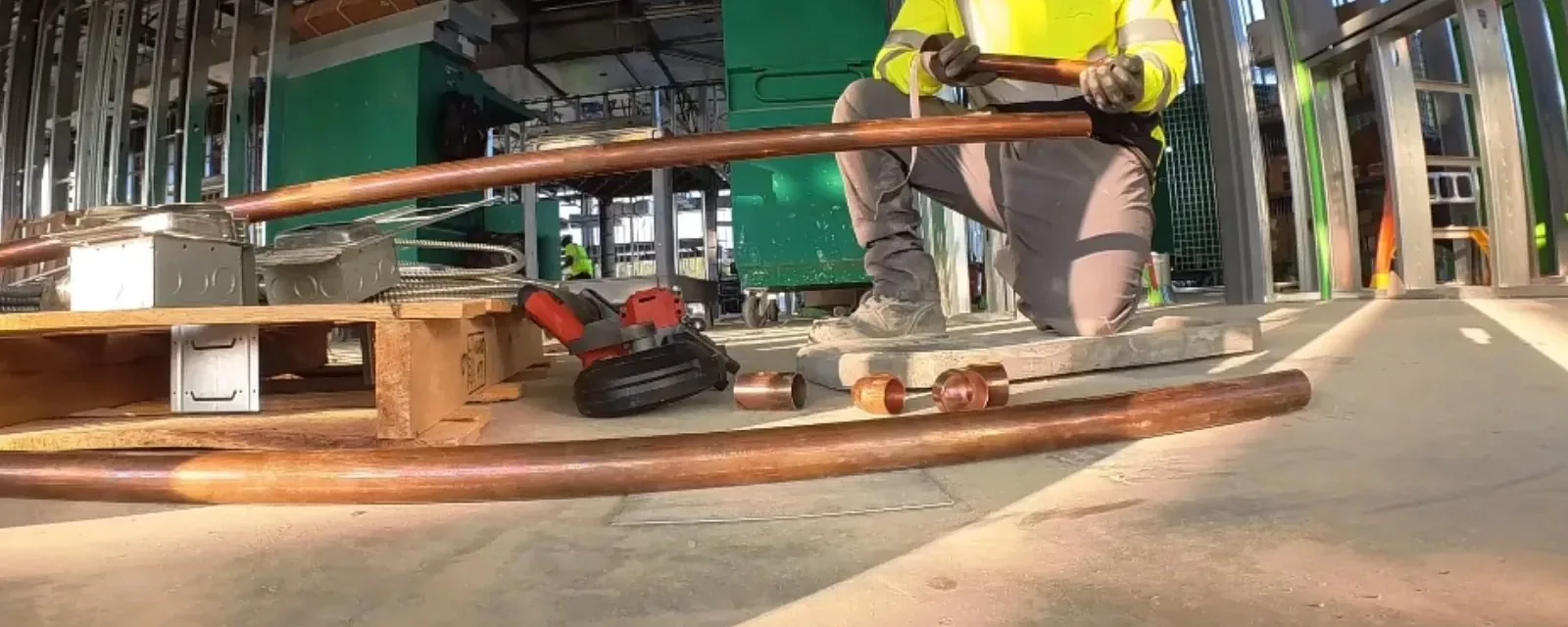
Plumbing installation in Georgetown, KY is the work of adding new pipes, fixtures and connections to a house, whether that is a bathroom addition, a remodeled kitchen, a laundry hookup or the rough-in on a new build. It differs from repair because it needs a plan, usually a permit and an inspection before the walls are closed.
This page covers what installation involves in Scott County, which jobs the state requires a permit for, and the safety rules around gas piping. For a failed system that cannot wait, 24/7 dispatch is available separately.
Jobs that count as new plumbing
These are the typical installation projects, and each one starts with the same question: what needs to be connected, and where.
Bathroom addition
New supply and drain lines to a toilet, sink and shower or tub, vented properly.
Kitchen remodel
Relocating a sink or adding a dishwasher, ice maker or pot filler line.
Laundry hookup
A washer supply and a standpipe with a trap, installed where the room is being created or moved.
Basement or garage fixtures
A utility sink, bar sink or bathroom rough-in in a space that had none.
Outdoor connections
A new hose bib or a supply line to a shed or outbuilding.
New construction rough-in
Pipes installed in the framing before drywall goes up.
Which plumbing jobs need a state permit
Kentucky regulates plumbing at the state level, and permits are not a city building-inspection matter. The list below follows 815 KAR 20:050 and Division of Plumbing guidance.
| Job | Permit needed? | Note |
|---|---|---|
| New plumbing installation | Yes | Includes added bathrooms, kitchens and laundry lines. |
| Moving a fixture or waste opening | Yes | Even a short relocation counts. |
| New or replacement water service | Yes | The buried line from the meter to the house. |
| Adding a backflow preventer to an existing water service | Yes | Covered in its own section below. |
| New or replacement water heater | Yes | See water heater installation. |
| Repairing leaks, cocks or valves | No | Includes simple repair work. |
Permits go only to a licensed master plumber or to a homeowner working on the home they occupy. Inspections come with the permit, and fees combine a base amount with per-fixture charges, so check what is current. The water heater installation page covers that job on its own.
Plumbing Installation: talk to a person now
Describe the problem and get a clear price before work starts.
How Georgetown's growth shapes installation work
Georgetown has grown since Toyota Motor Manufacturing Kentucky opened here in 1988, and newer subdivisions such as Falls Creek, along with schools like Great Crossing High School (opened 2019), reflect that. Homes in newer neighborhoods tend to have newer plumbing, so the work there is usually additions, basement bathrooms and finish-outs, not replacement.
Older homes close to downtown are a different job, because new lines must tie into existing piping of unknown material. In those cases the plumber checks what the new work connects to, and a failing old line may lead to a repiping conversation before anything new goes in.
How an installation job runs from plan to final inspection
The sequence is the same for a single bathroom or a whole house. The permit and the inspection before concealment are what make it different from a repair.
Plan the layout
The plumber walks the space, locates the nearest supply, drain and vent, and sketches the new runs.
Pull the permit
A licensed master plumber obtains the state permit before work begins.
Rough-in
Pipes, drains and vents are installed in the open framing, before drywall.
Inspection before closing walls
The state inspector reviews the rough-in while it is visible. The walls stay open until it passes.
Set fixtures and final inspection
Fixtures are connected, the system is tested and the final inspection is completed before use.
New construction rough-in basics
On a new build, rough-in means setting drain, vent and supply pipes in the slab or framing before the walls are closed. A homeowner building their own residence may pull the permit, submit a riser diagram and be present for inspections. Many builders hire a licensed master plumber to do it instead.
Gas line inspection and installation: separate rules, safety first
Natural gas piping carries more risk than water piping, since mistakes can mean fire or carbon monoxide. In Georgetown the gas franchise belongs to Columbia Gas of Kentucky, so ask that utility about anything on its side of the meter.
A gas line inspection typically checks the shutoff valve, appliance connectors, joints and the piping route, and the technician may use a pressure test or a leak-detection solution at connections. Gas work has its own permit and inspection rules, so ask whoever quotes it what permit applies and who inspects before you sign.
If you smell gas: leave the building first
If you smell gas, leave the building immediately and call Columbia Gas of Kentucky's emergency line or 911 from outside before calling a plumber. Do not flip switches, use a lighter or operate anything electrical on the way out.
A plumber is the right call after the utility has made the area safe, to find and repair a faulty connection. We do not promise a gas response time, because that belongs to the gas utility and the fire department.
Backflow preventer testing and installation
A backflow preventer stops used or contaminated water from flowing back into the clean supply, and sprinkler systems and some commercial lines commonly have one. Adding one to an existing water service requires a plumbing permit in Kentucky, and testing requirements vary by device and use, so ask your utility or the state inspector which apply to you. If your irrigation is leaking at the connection, leak detection comes first.
What shapes the price of an installation
Installation is quoted per job, because the layout of your house decides most of it.
Planned installation is paid for by the owner, since insurers cover sudden and accidental losses, not new work. Tell your insurer about a new bathroom, because it may change your policy.
Want your real number? Call (855) 575-2890.
Plumbing Installation questions answered
Yes. New plumbing installation requires a permit under Kentucky's plumbing regulation. A licensed master plumber obtains it, or a homeowner can for their own residence.
No. Moving a fixture or waste opening needs a permit, even if the move is short.
Leave the building and call Columbia Gas of Kentucky's emergency line or 911 from outside before calling a plumber. Do not use switches or flames on the way out.
It is the stage where pipes are installed in open framing, before drywall goes up. The state inspects the rough-in before walls are closed.
No. Plumbing permits are a state matter handled through the Division of Plumbing, while city building inspection covers building and HVAC permits. The state's Scott County plumbing inspector keeps office hours in Georgetown.
Yes, we serve homes in Midway and across the area on the service area page.
Where the local facts come from
According to these primary sources, which this page relies on for local facts, permit rules and published guidelines: