
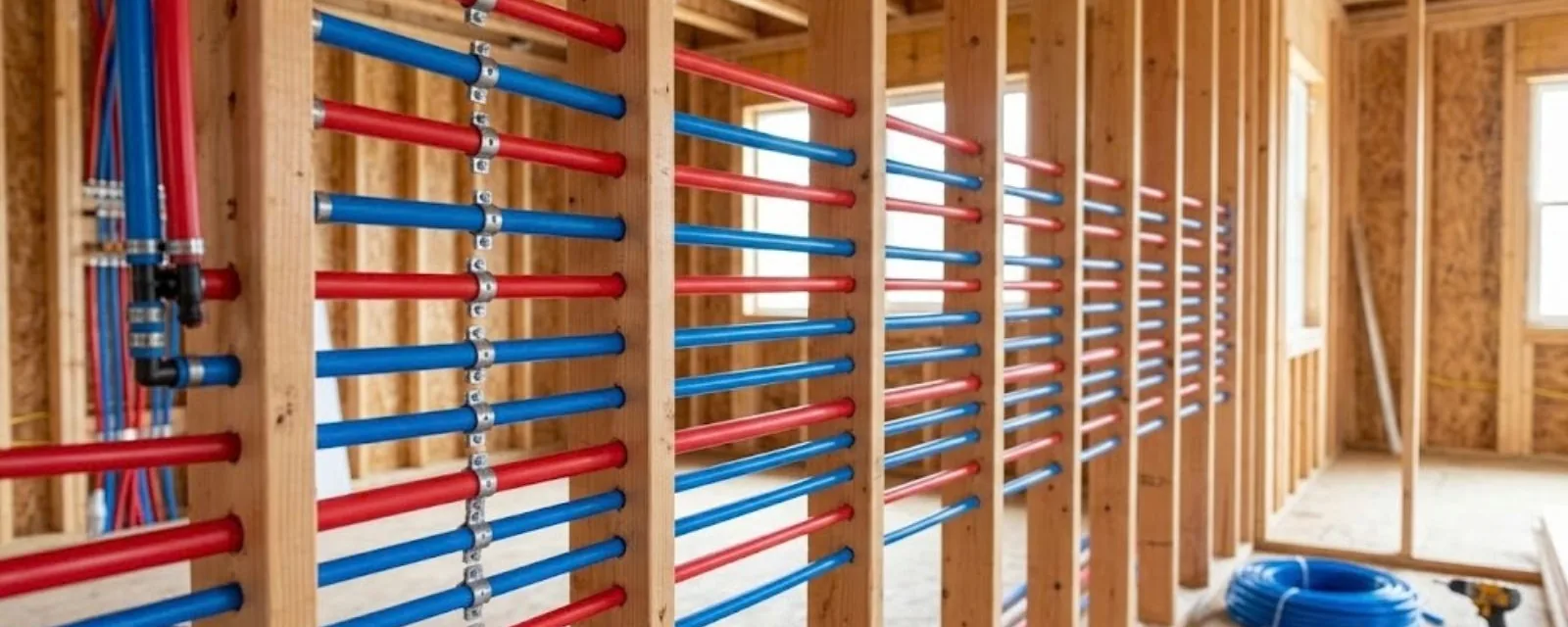
Repiping in Georgetown, KY means replacing the water supply lines inside a house, usually the whole system, when the old pipes are worn out rather than just leaking in one spot. It is planned work, done with the walls open and a permit on file, and it ends the cycle of patching a system that keeps failing.
Most repipes start with a pattern, not one event: water that comes out brown after sitting, pressure that sags when two taps run, or a third pinhole leak in a year. If you are unsure the pipes are the cause, a leak test comes first, and 24/7 dispatch is there if a pipe fails before you decide.
Rusty water, weak pressure and pinholes that keep coming back
A single leak is a repair. A pattern of these signs is the sign that the pipes themselves are the problem, and that is when repiping becomes the sensible question.
Rust-brown water
Water that runs brown or orange when first opened often means iron pipe corroding from the inside.
Weak flow at several fixtures
Mineral and rust buildup narrows the pipe, so showers and taps lose pressure together.
Repeated pinhole leaks
Tiny leaks in different spots on the same line mean the pipe wall is thinning along its length.
Water stains that return
A ceiling or wall stain that reappears after a repair points to a line that is failing again nearby.
Metallic taste or odor
Corroded pipe can leave a taste in the water. A water test and a pipe inspection tell you more than guessing.
Banging or whistling pipes
Noise can mean restricted or loose pipe. Not always a replacement issue, but worth an inspection with the others.
Copper, PEX, CPVC and galvanized: honest trade-offs
No single material wins every house. Confirm with your plumber what the Kentucky State Plumbing Code and the manufacturer allow for the application before choosing.
| Material | Where it shines | Where it falls short |
|---|---|---|
| Copper | Long track record, rigid, handles heat well, fits exposed runs | Higher material cost, joints are soldered or pressed, more labor to install. |
| PEX | Flexible tubing that snakes through walls with fewer cuts and fittings | Cannot sit in sunlight, and connections need to be accessible. |
| CPVC | Rigid plastic with solvent-welded joints, lower material cost | Can turn brittle with age and is less forgiving of rough handling. |
| Galvanized steel | What many older homes have today | Corrodes inside, narrows with time, and is the pipe being replaced, not chosen. |
Your plumber should explain why one material fits your layout, not just default to a favorite. Ask about the fittings used, where they will sit, and how the line is supported.
Repiping: talk to a person now
Describe the problem and get a clear price before work starts.
Galvanized pipe replacement in Georgetown's older neighborhoods
Georgetown has real historic housing. The Lane's Run, East Main Street Residential and South Broadway districts are all on the National Register, and older homes in those areas may still have galvanized steel supply lines. Galvanized pipe is steel with a zinc coating, and once the coating wears the pipe rusts from the inside out.
The result is the cluster of symptoms above: rusty water, falling pressure and leaks at threaded joints. The practical step is to have a plumber open a small inspection point and look at the inside of a pipe sample, because the outside of a galvanized line can look fine while the bore is nearly closed.
In a historic home, the plan also covers how much original plaster and trim must be opened. A plumber who explains the access plan before cutting protects the part of the house you care about.
Drywall access: what gets opened and what does not
Repiping means reaching the pipes, and most of them hide in walls, floors and ceilings. Plumbers usually open small access holes at fixtures, along stud bays and near the main, and run new lines through attics, crawlspaces and basements wherever possible to keep the openings few.
Flexible PEX bends around obstacles that rigid pipe cannot, which can cut the number of holes, but it does not remove them. Expect patching afterward, and ask who handles drywall repair, texture and paint. We take on repipes across our service area and in Midway, where the historic district covers most of the town.
What living through a repipe is like
A repipe disturbs a household for a short, planned stretch. Knowing the sequence makes it easier to plan around.
Walk-through and plan
The plumber maps every fixture, decides where new lines run and where access holes go, and agrees the price before anything is cut.
Permit and scheduling
A permit is pulled for the work. The schedule is set around when the water must be off.
Rough-in with water off in stages
New lines are run first, then fixtures are switched over. Water is off for part of the working day, so plan for it.
Inspection before walls close
The state inspector checks the new piping while it is still visible, which is why patching waits.
Pressure test and patching
The system is tested under pressure, then the access holes are patched.
When a permit is needed
Kentucky's plumbing regulation, 815 KAR 20:050, requires a plumbing installation permit for new plumbing installation and for moving a fixture or waste opening. Repiping a house usually involves new installation, and a licensed master plumber pulls the permit.
A homeowner may pull a permit only for work they do personally on a home they occupy. If a contractor offers to skip the permit, ask for the master plumber's Kentucky license and check it with the state Division of Plumbing.
Patch it or replace it
Both are legitimate. The deciding factor is how much of the system is wearing out, not only the leak in front of you.
Repair makes sense when
- One isolated leak, with the rest of the pipe in good shape.
- A failed fitting or valve, not the pipe wall.
- Damage from a specific cause like a freeze split.
Repiping makes sense when
- Pinholes keep appearing in different places.
- Water runs rusty at several taps.
- Pressure is poor at several fixtures.
- The system is galvanized steel that is failing inside.
What drives the cost of a repipe
The price depends on the house, not on a rate per fixture. These are the factors that move it most.
A planned repipe is generally not covered, because policies pay for sudden loss and not for slow wear. Damage from a pipe that bursts first may be, so ask your insurer.
Want your real number? Call (855) 575-2890.
Before you decide on a repipe
These questions get you a better quote and a better outcome.
- Which rooms have had leaks or stains, and how often?
- Is the water rusty at every tap or only at one?
- What is the pipe made of where you can see it, such as in a basement or under a sink?
- Are you planning a remodel, which would be a good time to open the walls?
- Do you want the house repiped all at once or in stages?
- Who will patch and paint after the plumbing is done?
Repiping questions answered
Brown or orange water often means iron pipe corroding or sediment disturbed in the line. If it clears after a few seconds, the source may be the pipe in the house or a recent change at the main.
If it happens at every tap and keeps recurring, have the pipes inspected. A repipe may be the answer if the lines are galvanized steel and failing.
Repeated pinhole leaks, rust-colored water at several taps, and low pressure at multiple fixtures together are the usual signals. A plumber looks at the pipe material and condition before recommending it. A single leak on an otherwise good line is usually a repair.
Some opening is unavoidable, but plumbers keep it to small access holes and use attics and crawlspaces where they can. Expect patching afterward, and ask who will finish the drywall and paint.
Usually yes for a repipe, since the state plumbing regulation requires a permit for new plumbing installation and for moving fixtures. A licensed master plumber pulls it. Simple leak repairs need no permit. See plumbing installation for the rules on new lines.
Most households do, with planned stretches without water. Ask about the schedule, and arrange alternatives for those stretches.
No. Repiping covers the supply lines inside the house. The buried line from the meter is a separate job, covered under water service line repair.
Where the local facts come from
According to these primary sources, which this page relies on for local facts, permit rules and published guidelines: