
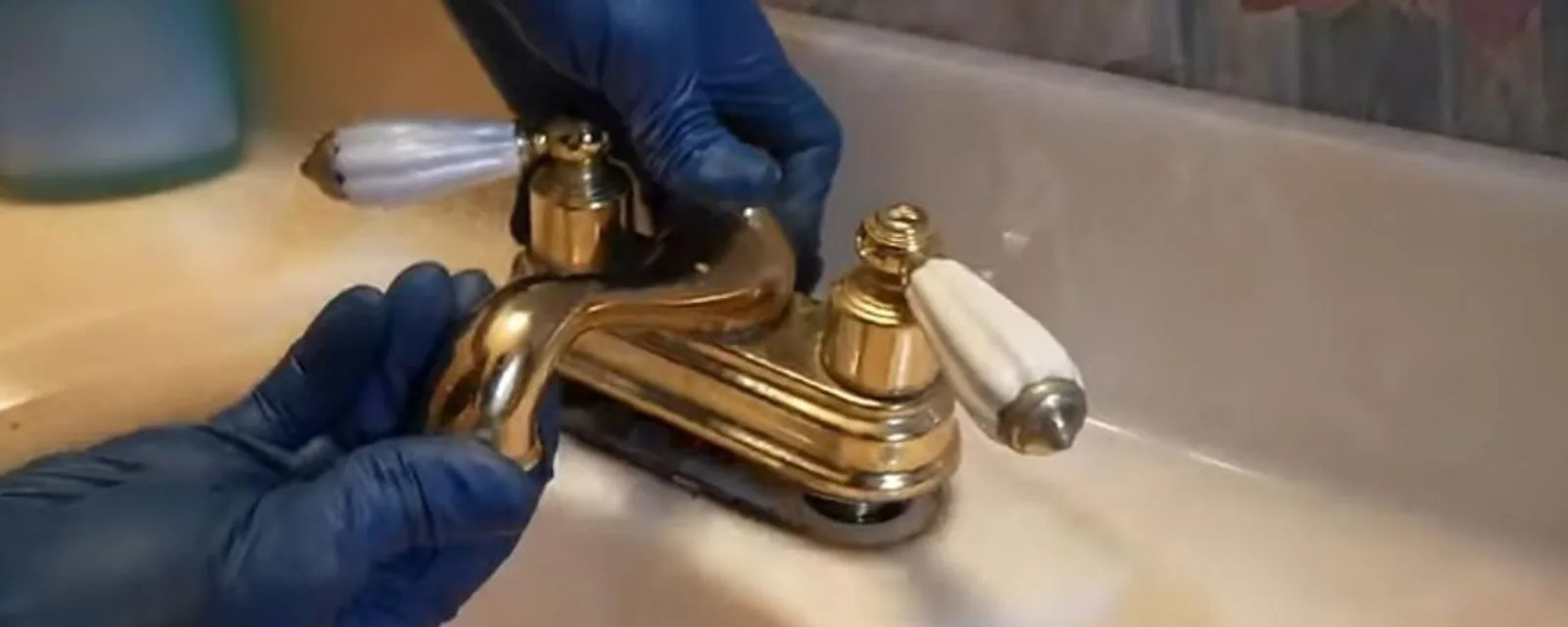
A bathroom faucet that drips from the spout usually has a worn cartridge, or a worn washer and seat, inside the valve. A leak around the handle base is more often an O-ring, and low or spraying flow is usually the aerator. The fix depends on which type of faucet you have, so identify the leak location first. In Georgetown, KY, mineral deposits from hard water speed up this wear.
Replacing a faucet part is a manageable job for many homeowners when the shutoff valves work and the parts are easy to match. This post walks through the diagnosis, shows which part fails in which faucet, and flags the points where a licensed plumber saves time.
Find the leak before you buy a part
Five minutes of looking prevents a second trip to the store.
Dry everything
Wipe the faucet, the counter and the cabinet floor, then run water and watch where moisture first appears.
Match the location
A drip from the spout points to the valve. Moisture at the handle base points to an O-ring or packing. Water under the sink points to supply lines or shutoff valves.
Close the supply
Turn the small oval or round handles under the sink clockwise. If water keeps flowing, the shutoff itself needs work.
Photograph the parts
Take pictures of the handle, the retaining nut or screw and the base so the right replacement is easy to find.
Bring the old part
A worn cartridge or washer set in your hand beats any guess at the hardware store.
Which part is wearing out
Faucet design controls the repair. Look at how the handle moves and compare it to this table.
| Faucet style | Typical wear part | Symptom |
|---|---|---|
| Two handles that turn several times | Rubber washer and valve seat | Steady drip from the spout, worse when closed hard. |
| Single lever that swings side to side | Cartridge | Drip, hard handle or temperature that will not hold. |
| Ceramic disc faucet | Disc cartridge or its seals | Slow leak that begins after months of normal use. |
| Any style | O-ring at the base | Water around the handle or the spout swivel. |
| Any style | Aerator screen | Weak or sideways spray, no actual leak. |
Some faucets look alike but use different cartridges. Check the brand on the faucet or inside the handle before ordering.
Rather have a licensed plumber look at it?
Call the 24/7 line. You get a clear price before work starts.
Washer and seat versus cartridge
Older two-handle faucets close a rubber washer against a brass seat. The washer wears down and the seat can get pitted, and either one can cause a drip. A single-handle faucet hides a cartridge that does the same job inside a sleeve.
Replacing a washer is cheap but needs a seat that is still smooth. If the seat is rough, a new washer wears out again quickly. A cartridge swap is often simpler than it looks, but the cartridge must match the faucet exactly.
Hard water deposits and what they do to a faucet
GMWSS, Georgetown's water utility, calls its supply extremely hard. Groundwater picks up calcium and magnesium from limestone, and those minerals dry into crusty white scale around the spout, inside the aerator and on cartridge surfaces that slide against each other.
That scale can keep a cartridge from sealing, so a part that looks fine may still leak. Soaking an aerator in vinegar for a short time often clears it, while a deposit-scored cartridge is better replaced.
Before you touch the faucet
A short prep saves a flooded cabinet.
- Close both shutoff valves under the sink and open the faucet to drain the lines.
- Plug the drain so small screws cannot disappear.
- Lay a towel in the basin to protect the finish.
- Keep every removed piece in the order it came off.
- Check the supply lines for kinks, corrosion or wet braiding.
- Replace the aerator washer when you reinstall the aerator.
- Open the shutoff valves slowly and check for drips after five minutes.
Repair it or replace the whole faucet
A repair is not always the better choice. These points help you decide.
Repair when
- The finish is in good shape.
- Parts for that model are easy to find.
- The shutoff valves close all the way.
- Only one part is worn.
Replace when
- The body is corroded or cracked.
- Parts are no longer made.
- The faucet leaks again soon after repair.
- You want a different style or spout height.
When to call a licensed plumber
Call if a shutoff valve will not close or drips when turned, since forcing a stiff one can break it and flood the cabinet. Call if the faucet body is corroded, if supply lines are bulging, or if water stains the cabinet floor with no obvious source. Our faucet repair plumbers handle these jobs and can often replace the valves while they are there.
A leak that lingers under the sink may be a drain issue, in which case drain service can help. We cover Georgetown and the surrounding county, and the Midway page and service area pages list the towns we reach.
Georgetown, KY local note: hard water and permits
The utility says it does not treat water for hardness at the plant, so the minerals reach your tap. In a bathroom that means aerators clog and cartridges wear faster than in soft-water areas, so plan to clean the aerator on a regular schedule.
The utility pages we reviewed give no hardness figure. If you want a number, test your tap or ask GMWSS.
Under 815 KAR Chapter 20, repairing leaks, cocks and valves does not need a plumbing permit. A faucet repair or valve replacement therefore does not trigger one. Moving a fixture or adding a new one would, so check before changing the layout.
Questions readers ask
The internal seal is worn or blocked by mineral scale. In older two-handle faucets that is usually the washer and seat. In single-handle faucets it is usually the cartridge.
No. Close the shutoff valves under the sink first. If they will not close fully, stop and call a plumber instead of forcing them.
Unscrew it from the spout, rinse out loose debris and soak it in vinegar to dissolve scale. Scrub gently, rinse, and reinstall with the washer seated.
No. The state does not require a plumbing permit to repair leaks, cocks or valves. Moving or adding a fixture does need one.
Georgetown Municipal Water and Sewer Service calls its water extremely hard. That leaves scale in aerators and on cartridges. Cleaning the aerator and replacing worn cartridges early helps.
Dry the lines with a towel and watch. A wet connection at the shutoff or at the faucet end points to the line or its nut. A drip at the spout points to the faucet valve.
Where the local facts come from
According to these primary sources, which this page relies on for local facts, permit rules and published guidelines: