
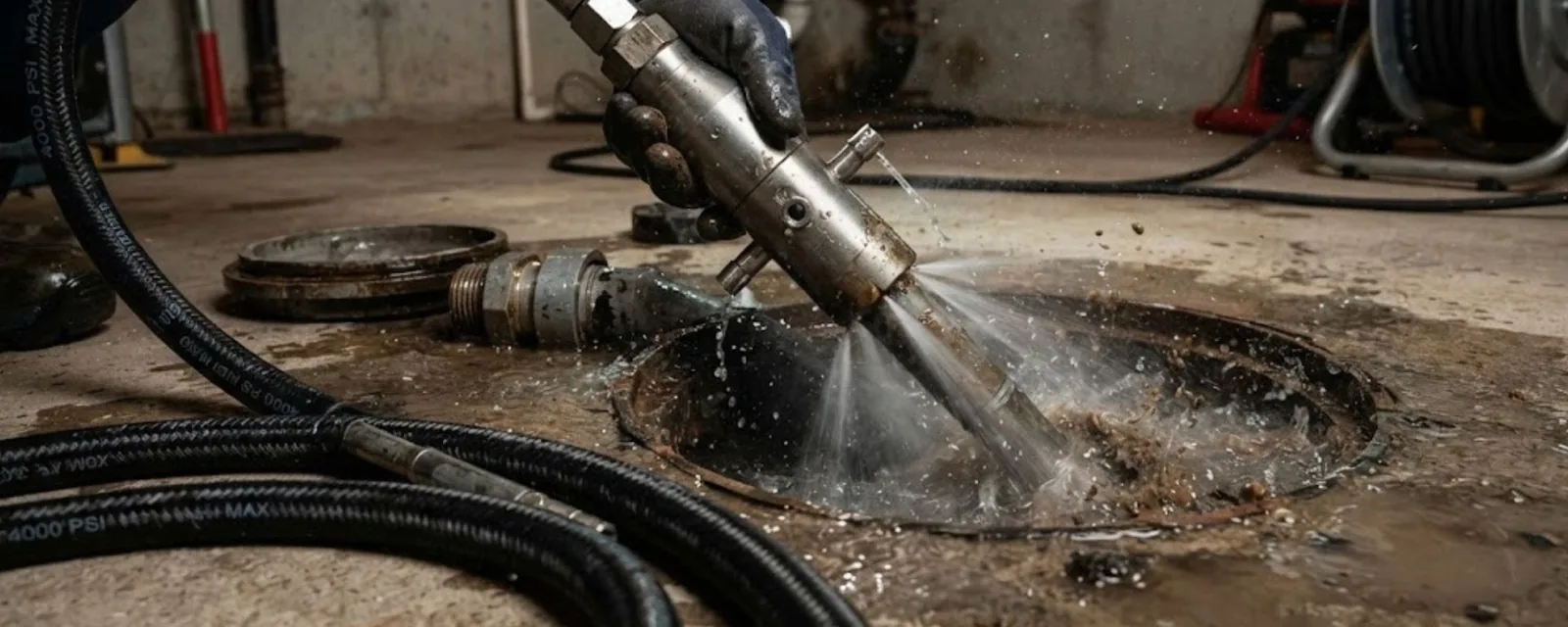
Hydro jetting in Georgetown, KY is a drain-cleaning method that sends high-pressure water through a hose and nozzle to scrub grease, scale and root growth off the inside of a pipe. It suits lines that keep slowing down, and it can also open a stopped main when a cable only makes a small hole. Our 24/7 dispatch handles urgent backups, and while you wait you should stop running water and keep people away from any wet floor.
Jetting is a strong tool, not a cure for every pipe. A line that is cracked, offset or collapsed can be damaged by pressure, so a camera look often comes first. We say so plainly when jetting is the wrong call, and we point you to sewer camera inspection instead.
Snaked it, and it clogged again a few weeks later?
A drain that clears for a short time and then slows down again is a classic sign that cabling opened a hole but left the buildup in place. A cable spins through the middle of a blockage. Grease, scale and fine root hairs stay stuck to the wall, and the opening narrows again.
Slow flow in every fixture, a gurgle after a flush, or a floor drain that bubbles when the washing machine empties all point to a restricted main. When that pattern repeats after each cabling visit, the pipe wall is the problem. Hydro jetting is the next step, because water at pressure scours the wall instead of poking through the center.
The technician still confirms the cause first. Roots, grease and mineral scale each respond differently, and a camera shows which one you have.
How hydro jetting works inside the pipe
A hydro jetter pumps water through a flexible hose to a nozzle with jets that point both forward and backward. The forward jets cut through the blockage, and the rear jets pull the nozzle along the pipe while spraying the wall. The water then carries debris downstream and out of the line.
Access matters. The hose enters through a cleanout, a pulled toilet or an opened trap, so a clean, reachable access point shortens the job. Different nozzle shapes handle grease, roots or heavy scale.
A technician works from the cleanout toward the main, pausing when the flow runs clear. For heavy roots, the nozzle may be paired with a cutter pass first. Afterward, many plumbers run a camera back through the line to see the pipe wall, and it is reasonable to ask whether that follow-up look is included.
Hydro Jetting: talk to a person now
Describe the problem and get a clear price before work starts.
Snake or jet: how the two methods differ
Both clear blockages, but they work on different parts of the problem. This is how plumbers usually choose.
| Question | Cable or snake | Hydro jet |
|---|---|---|
| What it does | Punches or hooks through the clog | Scours the whole pipe wall. |
| Best for | A single stoppage or a dropped object | Grease, scale and roots that return. |
| Pipe condition | Gentler on weak pipe | Needs a sound, continuous pipe. |
| How long relief lasts | Often shorter if buildup remains | Often longer when the wall is cleaned. |
| Access needed | A trap or cleanout | A cleanout or a wide opening for the hose. |
Cabling is still the right tool for many jobs. See drain cleaning for fixture drains and simple clogs.
Sewer backup: when jetting is the answer right now
When several fixtures back up together, water is usually stuck in the main line and has nowhere to go. A toilet that gurgles, a tub that fills as you run the washer, or sewage in a basement floor drain are signs of this. The first move is to stop using water and keep out of the affected room.
A jetter can open a stopped main faster than repeated cable passes when the blockage is mostly grease or packed paper. If tree roots have grown through a joint, jetting may clear the debris but not remove the entry point. That is why a follow-up camera look and sometimes a repair are part of the honest conversation. See sewer line cleaning for the main-line process.
We take these calls after hours, on weekends and at night. Same-day appointments are possible when the schedule allows, and the price is confirmed before work starts.
Jetting appointments, when available, cover Georgetown and Midway, and the service area page lists the other nearby towns.
When hydro jetting is a good fit, and when it is not
Pressure is useful only if the pipe can take it. This split is how we decide.
Jetting usually makes sense
- Grease buildup in a kitchen or main line.
- Roots in an intact pipe, after a camera look.
- Heavy scale or soap and paper residue.
- A line that clogs again after cabling.
- Pre-treatment before a pipe lining job.
Camera or repair comes first
- A collapsed or offset section of pipe.
- Visible cracks or separated joints.
- Very old, fragile or corroded pipe.
- A belly where water pools in the line.
- Unknown pipe material with no cleanout.
Georgetown, KY local note: limestone water and pipe scale
The city utility, GMWSS, calls Georgetown's supply extremely hard. Calcium and magnesium dissolve into groundwater as it moves through limestone. Hard water can leave mineral scale on pipe walls over many years, and in older homes that scale may narrow a line more than you would expect.
GMWSS does not publish a hardness figure on the pages we found, so test your tap or ask GMWSS if you want a number. For a stubborn slow drain, scale is one more reason to check the pipe with a camera before choosing between jetting and repair.
Signs your line may need jetting
None of these proves the cause on its own, but together they describe a pipe that needs more than a quick cable pass.
- The same drain has been snaked more than once in a short span.
- Water drains slowly from several fixtures, not only one.
- A toilet gurgles or a floor drain bubbles when another fixture runs.
- Kitchen water leaves a greasy film on the stopper or in the trap.
- A cabling visit pulled out roots or a handful of sludge.
- A sewer smell appears near a basement drain.
What the visit looks like
A jetting visit follows the same order each time, so you know what to expect.
Talk it through
The technician asks which fixtures are slow and how often the line has been cleared.
Check the pipe
A camera or a cable probe shows whether the line can take pressure.
Set up the jetter
The hose goes in at the cleanout, and the area is protected from spray.
Scour and flush
The nozzle works along the pipe until the water runs clear at the exit.
Confirm flow
Fixtures are run to test the drains, and any repair findings are explained.
What affects the price of hydro jetting
Jetting is quoted by the job, with the price given before work starts. These are the main variables.
Insurance generally treats sudden and accidental events differently from gradual wear, so ordinary buildup is usually not covered. A sudden backup may be handled differently, so ask your insurer.
If the line needs repair after jetting, we explain the options before any new work. Want your real number? Call (855) 575-2890.
Hydro Jetting questions answered
Yes. Dispatch runs 24/7, and a sewage backup that arrives on a Saturday night is treated as an urgent call. We often start by checking the pipe, so the jetting is done only if the line can take it. Stop using water until the plumber arrives.
Often, yes. A cable opens a channel, and grease or roots left on the wall can narrow it again within weeks. Jetting scours the wall, though the plumber should look at the pipe first. If the camera shows a crack or collapse, repair comes before cleaning.
On sound pipe, it should not. Water at pressure can harm a cracked, offset or fragile line, which is why we check first. Say so if the pipe is very old or has been repaired before, and consider a camera inspection when the condition is unknown.
It clears root growth inside the pipe, but it does not seal the joint or crack where the roots got in. Roots can return if the opening remains. For a recurring root problem, sewer line repair may be the lasting fix.
That pattern points to a restricted main line, not a single clog. Water and air have nowhere to go, so the weakest fixture lets go first. Stop using water and call.
Both. Restaurants, shops and offices have grease lines that collect fat quickly, and jetting fits them well. Details on that work are on the commercial plumbing page.
Where the local facts come from
According to these primary sources, which this page relies on for local facts, permit rules and published guidelines: