
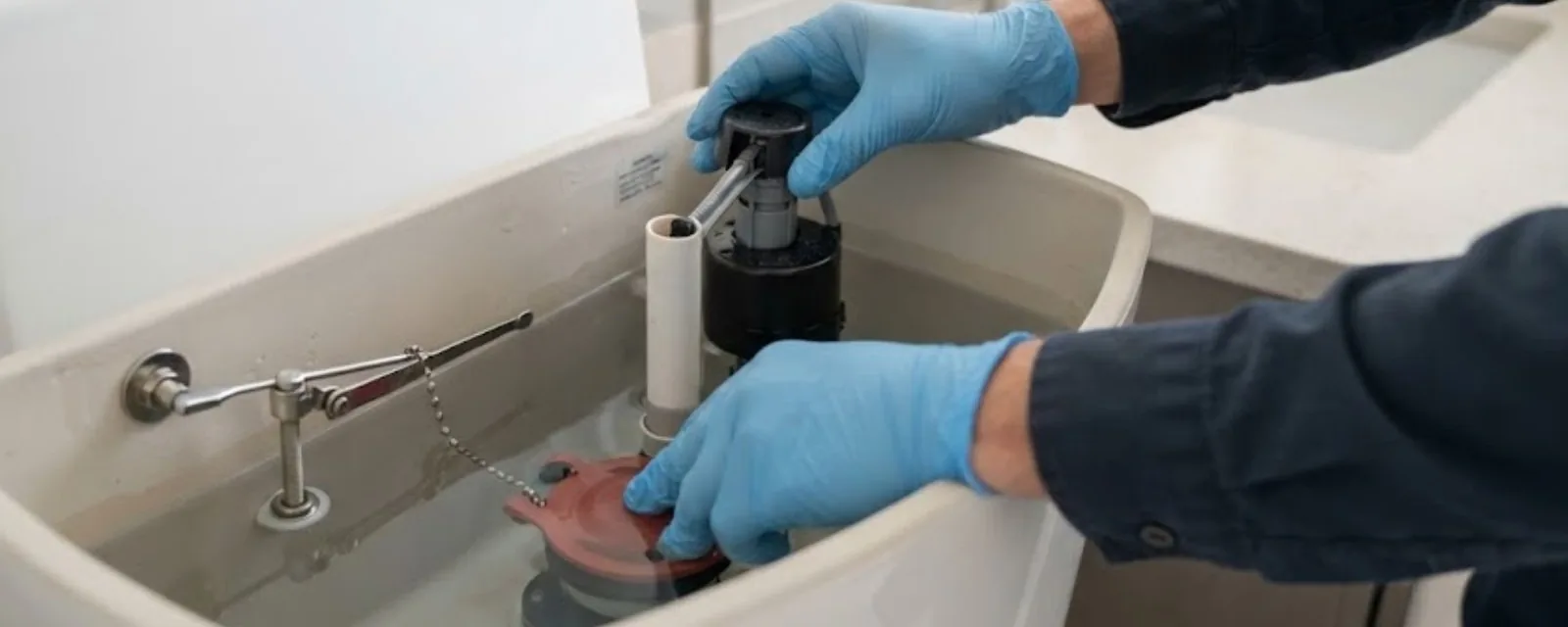
A toilet flange is the ring that bolts your toilet to the floor and connects its base to the drain pipe below. If you live in Georgetown, KY and your toilet rocks, leaks at the base or lets in a sewer smell, a damaged flange is a likely cause. A cracked or loose flange can often be fixed with a repair ring, but a rotted floor underneath means the job is bigger.
This guide explains how to tell the difference, what the replacement process involves and where the do-it-yourself line sits. For sorting out a toilet that is already rocking or leaking, our toilet repair and installation service page covers what a plumber checks on site.
Four signs the flange has failed
A flange hides under the toilet, so you notice its failure through what the toilet does.
The toilet rocks
Movement when you sit or shift weight means the bolts, the flange or the floor beneath has loosened.
Water at the base
A wet ring after flushing points to a failed wax seal, and a bent flange is often why the seal will not hold.
A sewer smell
A good seal blocks sewer gas. A faint smell near the base that stays after cleaning suggests the seal is open.
A soft or stained floor
Spongy flooring or dark stains around the toilet mean water has been getting into the subfloor for a while.
Repair ring or full replacement flange?
The choice depends on what is wrong with the flange and what is under it.
A repair ring usually works when
- The pipe part of the flange is intact and the floor is solid.
- The top ring is cracked or has broken bolt slots.
- The flange sits at a workable height above the finished floor.
- There is no sign of rot or past leaking.
Replacement is the better call when
- The flange is corroded, crushed or separated from the pipe.
- The subfloor around it is soft, dark or crumbling.
- The flange sits below the finished floor line.
- The drain pipe itself is damaged and needs work.
Rather have a licensed plumber look at it?
Call the 24/7 line. You get a clear price before work starts.
The replacement process, in order
This is the sequence a competent installer follows. Read it to understand the job, even if you decide to hire it out.
Shut off and empty
Close the supply valve, flush, and sponge out the remaining water in the tank and bowl.
Lift the toilet
Disconnect the supply line, remove the nuts on the closet bolts and lift straight up. A toilet is heavy and awkward, so use two people.
Inspect the flange and floor
Scrape off the old wax, then press on the floor around the opening. Any softness means the subfloor needs repair before anything else.
Set the new flange
Fasten it so it sits on top of the finished floor, following the manufacturer's instructions for height and for the pipe material.
Reset with a new seal
Use a new wax ring and new closet bolts, lower the toilet straight down, and tighten the nuts a little at a time on each side.
Flange height, wax rings and closet bolts
Height is the detail that most often goes wrong. If the flange sits below the finished floor, the wax ring has to bridge a gap it was not made for, and the seal can fail within weeks. Most installation guidance has the flange resting on top of the finished floor, so check the instructions that came with your flange and ask an inspector if you are unsure.
Never reuse an old wax ring. Once compressed it will not reseal the same way. Closet bolts are the two bolts that slide into slots on the flange and hold the toilet down. Tighten the nuts evenly and stop when the toilet is firm, because over-tightening cracks the porcelain.
DIY or professional: how the jobs compare
Some parts of a flange job are easy and some are not. Match your situation to the row.
| Situation | DIY reasonable? | Why |
|---|---|---|
| New wax ring and bolts, flange sound | Yes, with a helper | The work is limited to lifting and resetting the toilet. |
| Repair ring over a cracked top | Often | Needs a solid floor and careful screw placement. |
| Soft or rotted subfloor | Rarely | Floor repair comes first and affects the whole room. |
| Flange below the floor line | Rarely | May require cutting into the drain pipe. |
| Moving the toilet to a new spot | No | Moving a waste opening requires a state permit. |
If you find black staining or a musty smell once the toilet is up, stop and photograph it. That is a sign of long-term moisture.
Before you lift the toilet
Ten minutes of preparation prevents most of the mess.
- Shut off the supply valve and confirm it actually stops the flow.
- Lay towels and a bucket nearby for the water left in the trap.
- Check that you have a new wax ring, closet bolts and a putty knife.
- Clear a spot to set the toilet down on cardboard, not on the floor.
- Stuff a rag in the drain opening once the toilet is up to block sewer gas.
- Photograph the floor before and after for your own records.
When to call a licensed plumber about a toilet flange
Call a plumber if the floor feels spongy, the flange has separated from the pipe, or water is coming through a ceiling below the bathroom. The last one points to a hidden leak, and our leak detection service exists to find where water is actually traveling. Also call if you are moving the toilet, or if a repaired seal still leaks.
We work in Georgetown and the surrounding communities, including the town of Midway, and you can check the towns we serve before you call. If the toilet is only slow to drain, that is a different problem, and drain cleaning is usually where it starts.
Georgetown, KY local note: do you need a permit for a flange?
Under the Kentucky plumbing regulation, fixing leaks and working on cocks or valves does not need a permit. Moving a fixture or a waste opening does. That means resetting a toilet over its existing flange is unlikely to need one, while shifting the toilet to a new spot in the bathroom will.
Replacing a flange in the same place sits in a gray area, because the regulation does not clearly address it. Rather than guess, ask the state plumbing inspector for Scott County, whose office hours are listed at the Scott County Health Department, 300 East Washington Street. A short question there can save you from redoing work later.
Questions readers ask
Tighten the closet bolt nuts gently and test again. If the toilet still moves, or the bolts spin without gripping, the flange or floor is the problem. A toilet that stays steady with firmer bolts probably only needed that.
Sometimes. A fresh ring helps when the old one has dried out or been disturbed. If the leak returns, the cause is usually a flange that sits too low, a damaged flange or a loose toilet.
Both do the same job of sealing the toilet to the flange. Wax rings are the standard choice, and wax-free versions are made from other sealing materials. Follow whichever the toilet and flange manufacturers recommend.
A small gap in the seal can let sewer gas out without any visible water. A dry trap in a nearby drain can cause the same smell. A plumber can tell the two apart in a short visit.
Insurers generally pay for sudden, accidental loss, not for slow wear. A floor that rotted from a long, slow leak is often treated as maintenance. Ask your insurer before the repair.
The state plumbing inspector decides this, not the city. The inspector holds office hours at the Scott County Health Department on East Washington Street, so a visit there gets you a direct answer for your house.
Where the local facts come from
According to these primary sources, which this page relies on for local facts, permit rules and published guidelines: