
If your pipes are frozen in Georgetown, KY, do four things in this order: find your main shutoff, open the faucet the frozen line feeds, warm the pipe gently, and check every joint for leaks once water flows. Never use a torch or any open flame. A frozen pipe is a pipe with ice blocking it, and the danger is not the ice itself but what happens when it thaws and finds a crack.
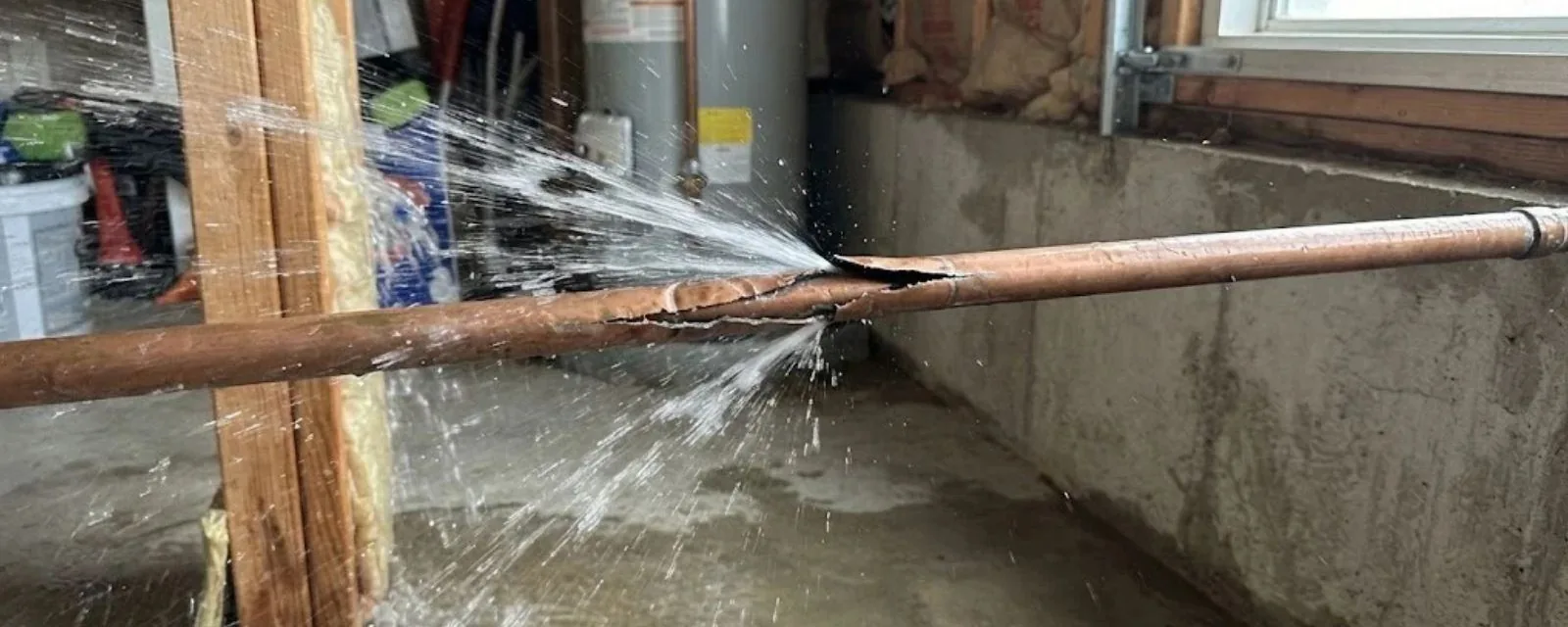
Frozen does not always mean burst, and many frozen pipes thaw with no damage at all. The steps below keep it that way, and they tell you when the situation is past a homeowner fix. If water is already spraying, skip ahead to the shutoff section and then call for burst pipe repair.
The first ten minutes: what to do first
Work through these in order. They protect the house before you try to fix anything.
Find the main shutoff
Know where the valve is before you need it. If a pipe has split, turning the water off limits the flooding.
Open the nearest tap
Open the faucet that is not running, hot and cold. As the ice melts, water and pressure have somewhere to go.
Find the frozen section
Look for frost on the pipe or a section that is cold and bulging. Pipes in garages, crawlspaces and exterior walls are common suspects.
Warm it gently
Apply mild heat from the faucet end toward the blockage, working steadily. Patience matters more than speed.
Watch for leaks
When flow returns, check the pipe, joints and the ceilings and walls nearby for drips.
Safe thawing versus risky shortcuts
The wrong heat source turns a frozen pipe into a fire or a flood.
Reasonable ways to thaw
- A hair dryer on a low setting, kept moving along the pipe.
- Towels soaked in warm water and wrapped around the pipe.
- A heating pad or heat lamp placed safely and watched the whole time.
- Raising the room temperature and opening cabinet doors.
Never do these
- Use a propane torch or any open flame on a pipe.
- Run an electric heater near standing water.
- Pour boiling water on a pipe.
- Leave a heat source running while you are away.
Rather have a licensed plumber look at it?
Call the 24/7 line. You get a clear price before work starts.
Where pipes tend to freeze in a Georgetown home
Pipes freeze where cold air reaches them and the house heat does not. These are common places, though your home may differ.
| Location | Why it freezes | Practical step |
|---|---|---|
| Garage walls and ceilings | Outdoor air leaks in and little heat reaches the pipes | Close the garage door and insulate exposed lines. |
| Crawlspaces | Vents and gaps let cold air circulate under the floor | Seal gaps and insulate pipes. |
| Exterior walls | Pipes sit near the cold outer surface | Open cabinet doors on cold nights. |
| Outdoor faucets | Water sits in the pipe through the wall | Disconnect hoses and shut off the supply inside. |
| Unheated rooms | No steady heat source | Keep a low background heat running. |
Older homes may have pipes run through spaces that newer homes avoid, so a walk-through before winter is worthwhile.
If a pipe has already split
A split often shows up only when the ice melts. Water appears at a seam, drips from a ceiling or sprays when the pressure returns. Shut off the main valve, open a tap on the lowest floor to drain the line, and switch off power to wet areas if you can do so safely from a dry spot.
Take photos of the damage before you clean up, because your insurer may ask. Insurers generally pay for sudden, accidental loss, and a freeze burst is often treated that way, but policies differ. Ask your insurer how yours reads.
Preventing the next freeze
Most freezing is preventable with a few cheap habits.
Insulate exposed pipes
Foam sleeves on lines in garages and crawlspaces slow heat loss.
Keep the heat on
Set the thermostat no lower than you would for comfort while you are away, since an empty house can freeze.
Open cabinet doors
On very cold nights, let warm air reach pipes under sinks on exterior walls.
Let a faucet drip
A thin stream on the coldest night keeps water moving and relieves pressure.
Seal air leaks
Caulk and foam gaps where pipes pass through walls and floors.
Know your shutoffs
Label the main valve and test it each fall so it works when you need it.
After the water is flowing again
A thawed pipe can hide damage. Spend a few minutes confirming the line is sound.
- Run each faucet and check that pressure is normal.
- Look at every visible joint and the pipe itself for drips.
- Check ceilings and walls below the frozen section for stains.
- Watch the water meter with all taps off to see if it still moves.
- Listen for hissing in the walls.
- Insulate the section that froze before the next cold night.
When to call a licensed plumber
Call if you cannot find the frozen section, if the pipe is bulging or cracked, if thawing is not working after a reasonable try, or if any water is leaking. A hidden leak behind a wall needs the tools of leak detection to find. Our 24/7 dispatch covers freezing nights too.
We serve Georgetown and nearby towns including Midway, and the full list is on our service area page. If you are not sure whether the situation is urgent, a short call can settle it.
Georgetown, KY local note: cold nights and who owns the meter shutoff
The National Weather Service climate normals for Lexington, the nearest station, show freezing lows on 19.3 days in December, 19.2 in February and 13.1 in March, plus a few in October and April. That spread means the risk is not limited to one cold snap in January. Check your pipe insulation in October, and keep it in place through March.
Two utilities serve Scott County. Georgetown Municipal Water & Sewer Service serves the city, while Kentucky American Water serves parts of the northern county, including the Moon Lake, Deer Run and Mallard Point subdivisions. The shutoff at the meter belongs to the utility, so find out which one serves your address now, not during a burst, and know where your own interior valve is.
Questions readers ask
A frozen line usually affects one faucet or one part of the house, and it happens during cold weather. A blocked drain shows up as slow draining, not missing supply. Frost on an exposed pipe is a strong clue.
Yes. An open tap lets melting water flow and relieves pressure between the ice and the faucet. Leave it open until normal flow returns.
It can when temperatures rise, but the pipe may be cracked without showing it. Keep a tap open and watch for leaks when it thaws.
Only with great care. Never place one near standing water, and never leave it unattended. A hair dryer on low is easier to control.
Often, if the burst was sudden, but policies differ. Insurers generally pay for sudden, accidental loss and not for neglect. Call your insurer and photograph the damage.
That shutoff is the water utility's. Georgetown's city utility and Kentucky American Water serve different parts of Scott County, so check your bill to see which one is yours. Use your own interior main valve first.
Where the local facts come from
According to these primary sources, which this page relies on for local facts, permit rules and published guidelines: